7.2 Structure of the Manifest
The structure of the Manifest is described in below. The Manifest can be used to signal that a batch of messages created in accordance with other parts of the ECM standard is “closed”. The Manifest contains six sub-elements as depicted in Figure 3:
A mandatory
@AvsVersionIdthat communicates the version of the allowed value sets used in the message;A mandatory
MessageHeaderthat communicates general message metadata as depicted in Figure 4;A mandatory tag
MessageControlTypein theMessageHeaderto inform the recipient whether the message was sent as part of a test or part of a commercial communication;
A mandatory
RootTagidentifying the location of the folder containing all messages in the batch communicated through theManifest;A mandatory tag containing the number of files making up the batch (excluding the
Manifest);An optional tag for the date and time of batch creation; and
A mandatory array of
MessageInBatchcomposite, each describing one file in the batch (see Figure 5). TheMessageInBatchcomposite contains, for each file in the batch:A mandatory tag to indicate the type of message as defined in a separate part of the ECM standard;
A mandatory
MessageId;A mandatory
URLproviding the location of the message; andOptional tags that enable the message sender to provide either a hash sum or digital signature for the message.
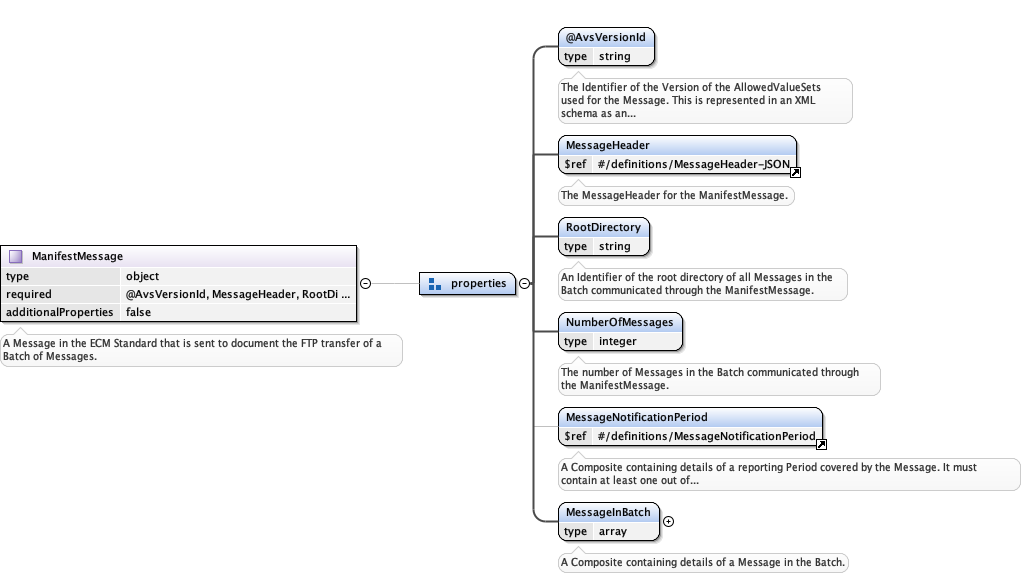
Figure 3 – Structure of Manifest
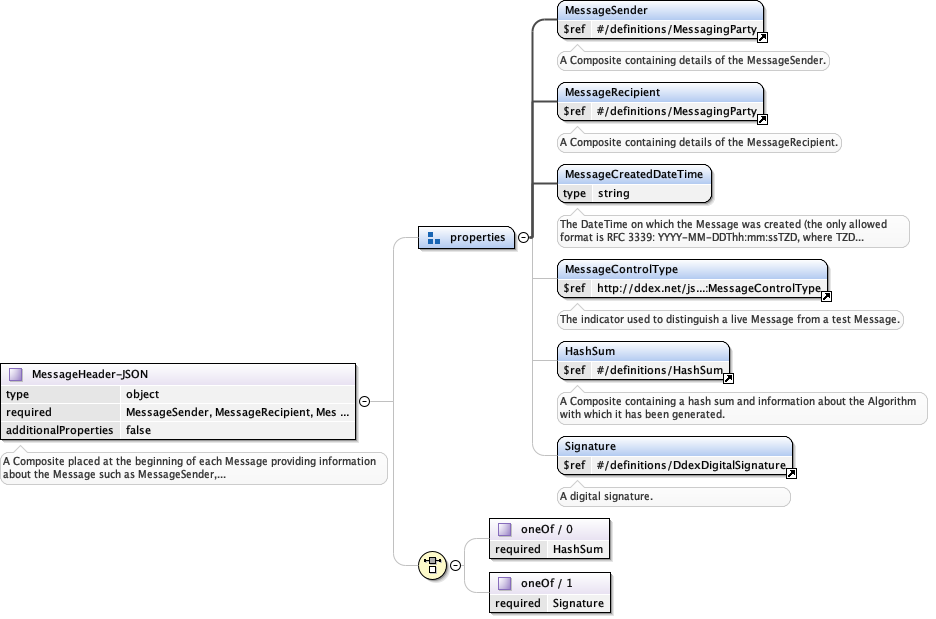
Figure 4 – Structure of the MeassageHeader composite of the Manifest
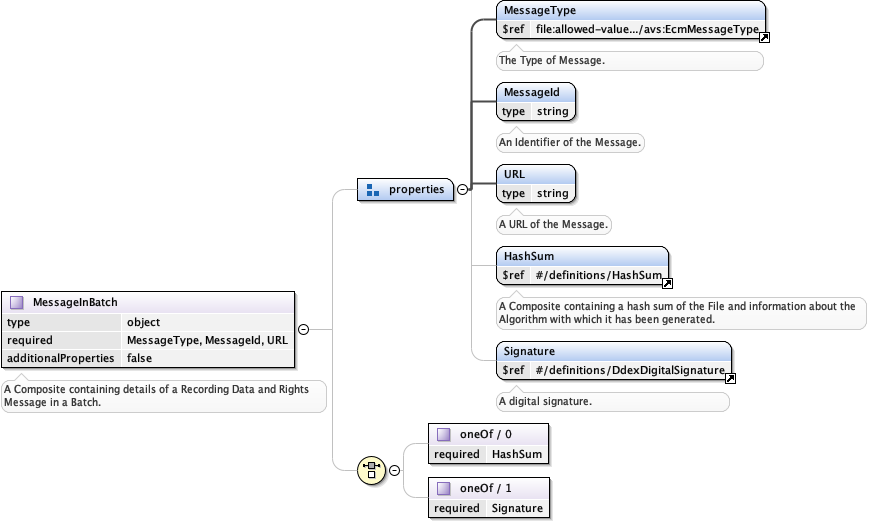
Figure 5 – Structure of the MessageInBatch composite of the Manifest